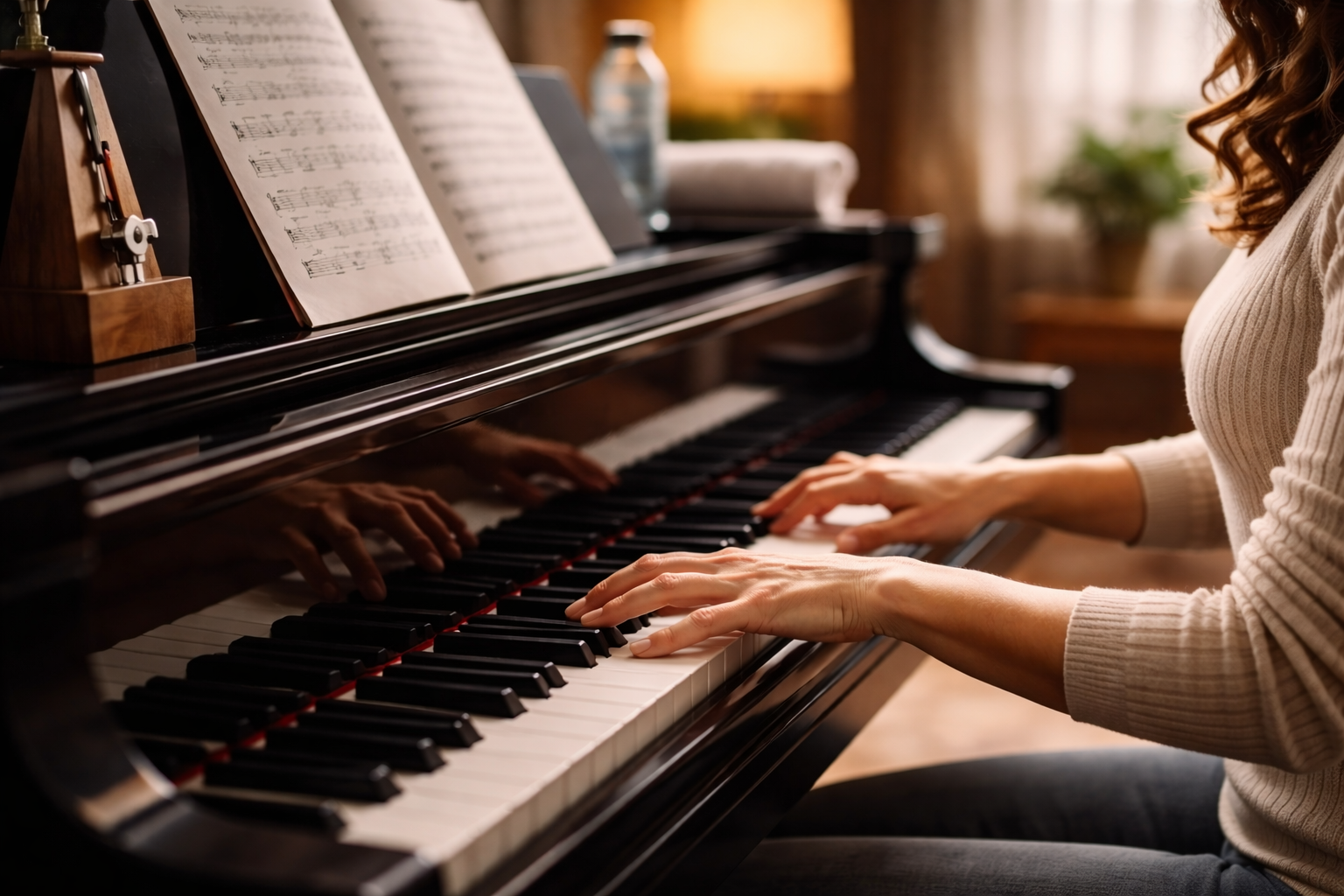
Piano technique is one of the most misunderstood topics among adult learners. Many adults assume technique is only for advanced or classical pianists, while others fear that focusing on technique will make playing feel rigid or unnatural. In reality, proper piano technique is what allows adults to play with freedom, confidence, and long term comfort.
This article explains how adult pianists can build strong, efficient, and healthy technique without strain. The focus is not on perfection or virtuosity, but on control, reliability, and sustainable progress.
What Piano Technique Really Means
Piano technique is not about playing fast or impressively. It is about how your body interacts with the instrument.
Good technique allows you to:
Play accurately with less effort
Maintain consistency under pressure
Avoid physical tension and injury
Improve tone and control
Learn music faster
For adults, technique is especially important because the body is less forgiving than in childhood. Efficient movement prevents fatigue and discomfort, making long term learning possible.
Common Technique Problems Among Adult Beginners
Adults often bring habits from daily life into piano playing. These habits can limit progress if left unchecked.
Common issues include:
Tense shoulders and raised arms
Collapsed or overly stiff fingers
Locked wrists
Excessive force when pressing keys
Poor bench height or sitting position
These problems are not signs of inability. They are natural and correctable with awareness and proper guidance.
Proper Piano Posture and Body Alignment
Everything in piano technique begins with posture. Sitting correctly sets the foundation for all movement.
Key posture principles include:
Sitting at a height where forearms are roughly parallel to the floor
Feet flat on the ground for balance
Back upright but relaxed
Shoulders released and not lifted
Elbows slightly in front of the body
Good posture allows the hands to move freely and reduces unnecessary tension.
Hand Shape and Finger Curvature
Hand shape plays a major role in control and endurance.
The ideal hand shape is natural and relaxed, similar to holding a small ball. Fingers should be gently curved, not rigid. The thumb should rest comfortably on its side rather than lying flat or collapsing.
Adults sometimes overthink hand position. The goal is functional comfort, not stiffness.
Developing Finger Strength the Right Way
Many adult learners worry about finger strength. While strength is necessary, it should never come from force.
Finger strength develops through controlled repetition and coordination, not pressure.
Effective methods include:
Slow scales played evenly
Five finger patterns
Simple arpeggios
Repeated note exercises at low volume
Playing softly with control builds strength more efficiently than playing loudly with tension.
Wrist Movement and Flexibility
The wrist acts as a shock absorber between the arm and the fingers. A flexible wrist improves tone and reduces strain.
A stiff wrist causes uneven sound and fatigue. Gentle wrist motion should accompany finger movement, especially in chords and repeated notes.
Simple wrist circles away from the piano and relaxed wrist drops on the keyboard can improve flexibility.
Arm Weight and Natural Movement
One of the most important concepts in piano technique is using arm weight instead of finger force.
This means allowing the natural weight of the arm to assist key depression rather than pushing with isolated finger muscles.
Using arm weight creates fuller sound with less effort. It also reduces tension in the hands and fingers.
Adults often improve dramatically once they stop trying to press keys and instead let gravity assist movement.
Building Speed Without Tension
Many adult learners believe speed comes from practicing faster. This is one of the biggest technique mistakes.
Speed comes from relaxation and efficiency, not force.
The correct approach involves:
Practicing slowly with precise motion
Eliminating unnecessary movement
Gradually increasing tempo
Maintaining relaxation at all times
If tension appears as tempo increases, slow down. Speed should never compromise control.
Technique Exercises Adults Should Focus On
Not all technical exercises are equally useful for adult learners.
Highly effective exercises include:
Major and minor scales
Broken chords
Simple Hanon style patterns played slowly
Chord transitions
Repeated note coordination
Exercises should be short, focused, and intentional. Five to ten minutes per session is sufficient when done correctly.
Avoiding Injury and Overuse
Adults are more prone to repetitive strain injuries if technique is ignored.
Warning signs include:
Pain
Numbness
Tingling
Persistent stiffness
Discomfort is a signal to stop and adjust. Pushing through pain is never productive.
Frequent breaks, gentle stretching, and relaxation awareness prevent injury and ensure longevity.
Integrating Technique Into Real Music
Technique should not exist in isolation. The ultimate goal is applying it to real music.
When learning a piece, identify technical challenges such as:
Fast passages
Large leaps
Chord coordination
Hand independence
Use targeted exercises to address those challenges directly within the musical context.
This approach makes technique meaningful rather than mechanical.
How Long It Takes to Develop Solid Technique
Adults often want clear timelines. While every learner is different, noticeable improvement in comfort and control usually appears within weeks of focused attention.
Long term technical development continues indefinitely. The goal is not mastery, but constant refinement.
Consistency matters more than intensity.
Mental Approach to Technique for Adults
Perhaps the most important element of technique is mindset.
Approach technique as a support system, not a limitation. Proper technique frees expression rather than restricting it.
Avoid self criticism. Progress is incremental and often subtle.
Patience and curiosity create better results than pressure.
Final Thoughts on Piano Technique for Adult Learners
Piano technique is not reserved for professionals or advanced players. It is a practical tool that allows adults to play comfortably, confidently, and sustainably.
By focusing on posture, relaxation, efficient movement, and mindful practice, adults can build technique that supports musical goals rather than hindering them.
Technique is not about playing harder. It is about playing smarter.