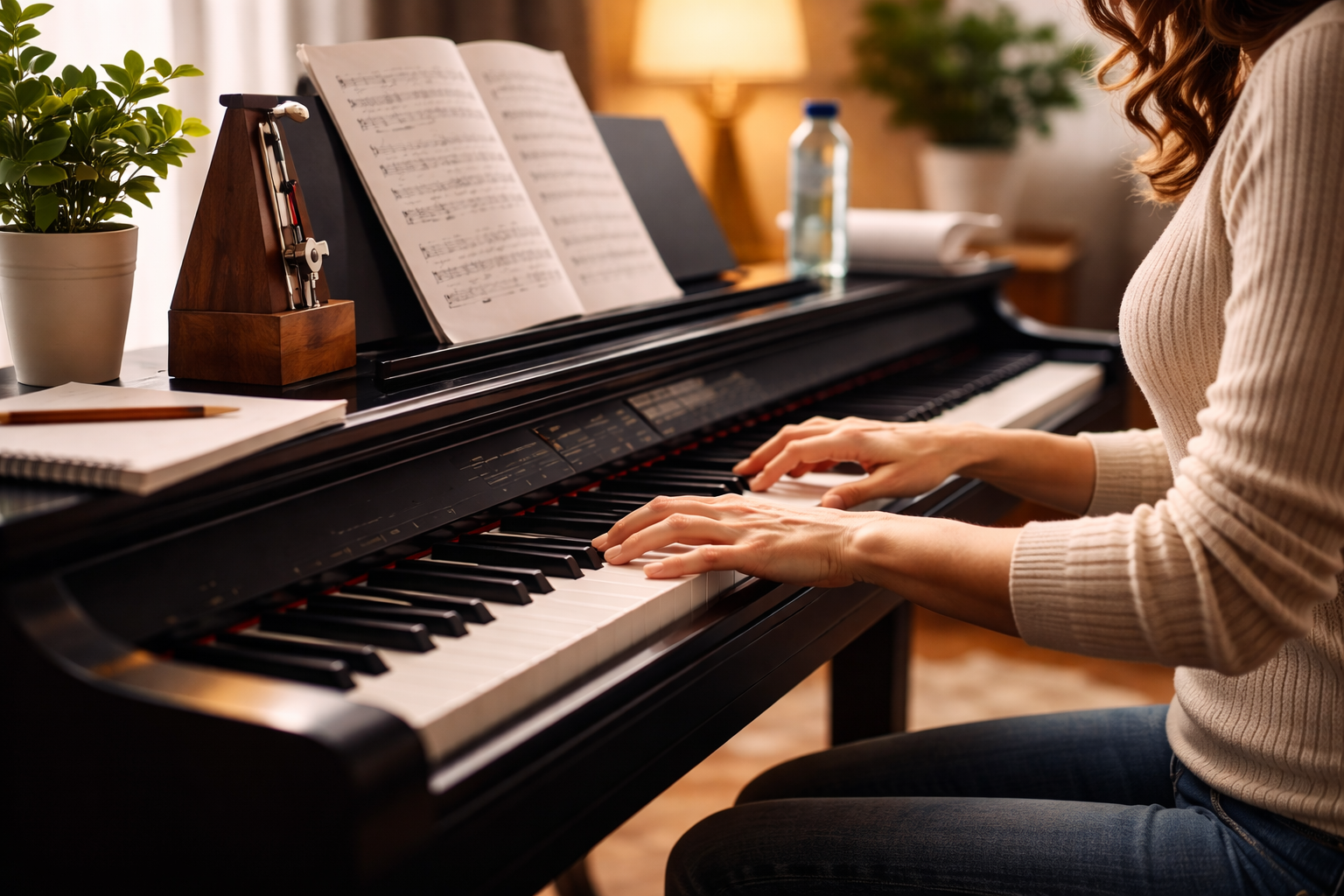
Choosing between a digital piano and an acoustic piano is one of the most important decisions adult beginners face. This choice directly affects motivation, consistency, comfort, and long term progress. Many adults worry about making the wrong decision and delaying their learning before it even begins.
The truth is that both digital and acoustic pianos can be excellent learning tools for adults. The best choice depends on lifestyle, goals, space, budget, and how you plan to practice. This article provides a complete, realistic comparison to help adult learners choose the instrument that supports steady progress and long term commitment.
Why the Piano Choice Matters More for Adults
Adults learn differently from children. Time is limited, schedules are complex, and motivation is closely linked to convenience.
An instrument that is difficult to access, too loud, uncomfortable to play, or intimidating can quietly sabotage practice consistency. On the other hand, a piano that fits seamlessly into daily life increases the likelihood of regular practice.
For adult learners, the best piano is not the most expensive or prestigious one. It is the one that encourages you to sit down and play consistently.
Understanding the Core Differences
Before comparing advantages, it is important to understand how digital and acoustic pianos differ fundamentally.
An acoustic piano produces sound through hammers striking strings. Tone is created entirely through mechanical interaction and resonance within the wooden body.
A digital piano produces sound electronically using recorded samples or modeled sound engines. Key movement is simulated rather than mechanical.
Both instruments use similar layouts, but the playing experience and practical considerations vary significantly.
Advantages of Digital Pianos for Adult Learners
Digital pianos have become extremely popular among adult learners for good reason.
One of the biggest advantages is convenience. Digital pianos require no tuning, minimal maintenance, and are ready to play at any time.
Volume control is another major benefit. Adults living in apartments or shared homes can practice freely using headphones without disturbing others. This alone often leads to longer and more consistent practice sessions.
Digital pianos are also more compact and portable. Many models fit easily into small spaces and can be moved without professional help.
Additional features often support learning:
Built in metronomes
Recording functions
Multiple sounds
Practice modes
Connectivity to apps or computers
These tools can enhance structured practice when used intentionally.
The Importance of Weighted Keys on Digital Pianos
Not all digital pianos are suitable for serious learning.
For adults, weighted keys are essential. Weighted or hammer action keys simulate the resistance of an acoustic piano and allow proper finger strength and control to develop.
Unweighted or semi weighted keyboards may feel easier at first, but they limit technique development and make transitioning to an acoustic piano difficult later.
An adult learner should prioritize key feel over additional features.
Limitations of Digital Pianos
Despite their advantages, digital pianos have limitations.
The main limitation is sound and touch realism. Even high quality digital pianos cannot perfectly replicate the complexity of an acoustic instrument.
Some players feel less emotional connection to digital sound. Others notice reduced dynamic range or subtle differences in key response.
These differences matter more for advanced players. For beginners and intermediate adult learners, they rarely prevent meaningful progress.
Advantages of Acoustic Pianos for Adult Learners
Acoustic pianos offer a natural playing experience that many learners find inspiring.
The tactile feedback of real hammers and strings provides subtle control over tone and dynamics. This sensitivity can enhance musical expression and listening skills.
Acoustic pianos also encourage discipline. There are no distractions such as sound options or digital menus.
For adults who value traditional sound and physical connection, an acoustic piano can be deeply motivating.
Challenges of Owning an Acoustic Piano
Acoustic pianos require maintenance. Regular tuning is necessary to maintain proper pitch. Environmental factors such as humidity and temperature affect tuning stability.
They also require space and permanence. Acoustic pianos are heavy and difficult to move, making them less flexible for changing living situations.
Volume is another concern. Adults living in apartments may struggle with practice timing due to noise restrictions.
These factors do not make acoustic pianos bad choices, but they must be considered honestly.
Cost Comparison Digital Versus Acoustic
Budget is often a deciding factor.
High quality digital pianos are generally more affordable than acoustic pianos. A good digital piano with weighted keys costs significantly less than even a basic acoustic upright.
Acoustic pianos also involve ongoing costs:
Tuning
Maintenance
Potential repairs
Digital pianos have minimal ongoing expenses.
For many adult learners, digital pianos provide a lower risk entry point without sacrificing progress.
Sound Quality and Musical Development
A common concern is whether learning on a digital piano limits musical development.
For beginners and intermediate adults, the answer is no.
Modern digital pianos offer high quality samples with realistic dynamics. They allow learners to develop rhythm, coordination, reading skills, and technique effectively.
Advanced tonal refinement becomes important later in development, at which point some learners transition to acoustic pianos.
Starting digitally does not prevent later growth.
Which Piano Is Better for Consistent Practice
Consistency is more important than instrument type.
Adults who own digital pianos often practice more frequently due to ease of access, headphone use, and convenience.
Acoustic pianos may inspire deeper sessions but sometimes discourage daily practice due to noise constraints or setup.
The best piano is the one you will use consistently.
Hybrid Options and Practical Alternatives
Some adults choose hybrid solutions.
Hybrid pianos combine digital sound engines with real hammer actions. These offer an experience closer to acoustic pianos with digital flexibility.
Another option is practicing primarily on a digital piano while occasionally playing acoustic pianos elsewhere. This approach works well for learners with limited space.
Matching Piano Choice to Learning Goals
Your goals should guide your decision.
Choose a digital piano if you:
Live in an apartment
Need volume control
Have limited space
Want flexible practice
Prefer lower maintenance
Choose an acoustic piano if you:
Have adequate space
Value traditional sound
Can practice without noise issues
Enjoy physical instrument interaction
Neither choice is inherently better. Alignment with lifestyle matters more.
Common Adult Mistakes When Choosing a Piano
Adults sometimes delay learning while searching for the perfect instrument.
Another mistake is buying overly advanced or expensive equipment early.
The goal is to start learning, not to make a lifelong instrument decision on day one.
Progress matters more than perfection.
Final Thoughts on Choosing Between Digital and Acoustic Pianos
Both digital and acoustic pianos can support excellent piano learning outcomes for adults.
The ideal choice is the one that fits your environment, schedule, and motivation. A digital piano offers convenience and accessibility, while an acoustic piano offers traditional sound and touch.
There is no wrong choice, only choices that align better or worse with your lifestyle.
The most important step is not choosing the perfect piano. It is starting to play and continuing consistently.
With regular practice, thoughtful learning, and patience, progress will follow regardless of the instrument you choose.